
Basement Flood & Wet Carpet: Mould Health Risks and Why the Right Restoration Company Makes All the Difference
Wet basement carpet after a flood is one of the fastest paths to hidden mould, poor indoor air quality, and long-term health problems. Learn the real health risks, the industry-standard water damage practices/S520 rules, and why choosing an IICRC WRT/FSRT and PMII CMR-certified restoration company protects your home, your insurance claim, and your family.

What a basement flood actually looks like — and what proper remediation looks like
Field photos that illustrate every stage covered in this guide: the flood itself, the mould that follows, the industry-standard drying setup, and the moisture inspection non-certified crews skip.
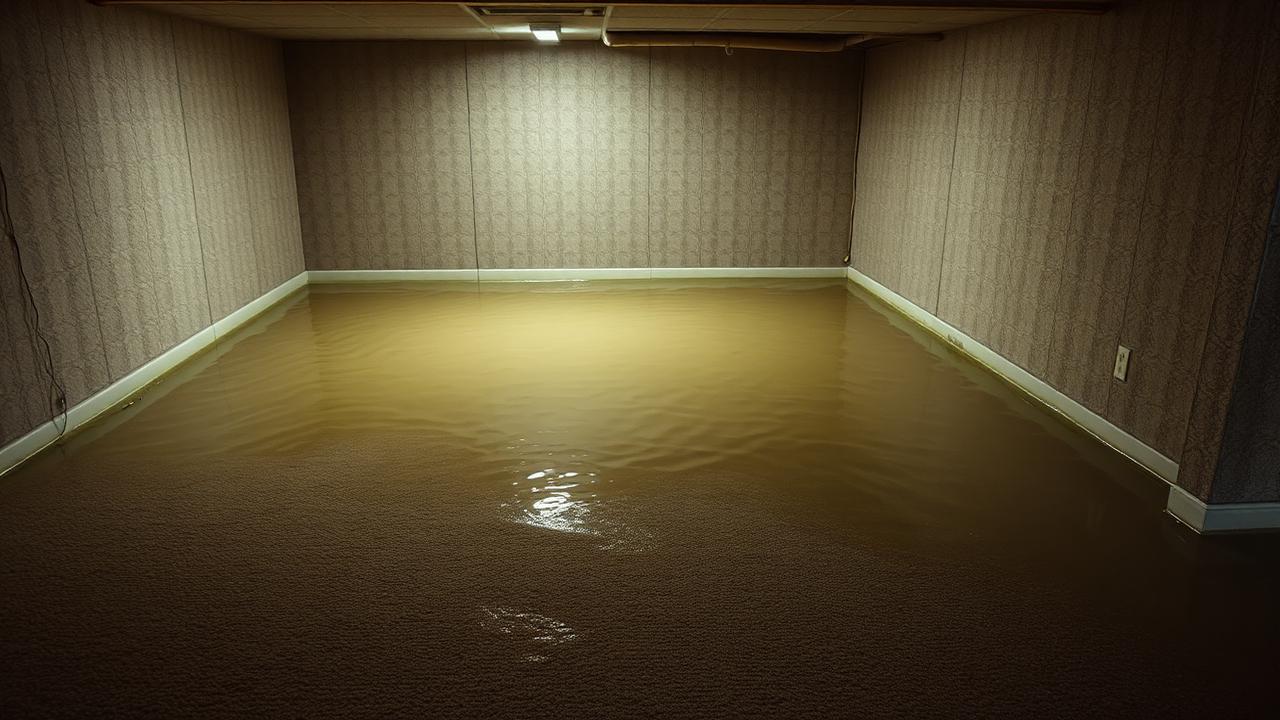
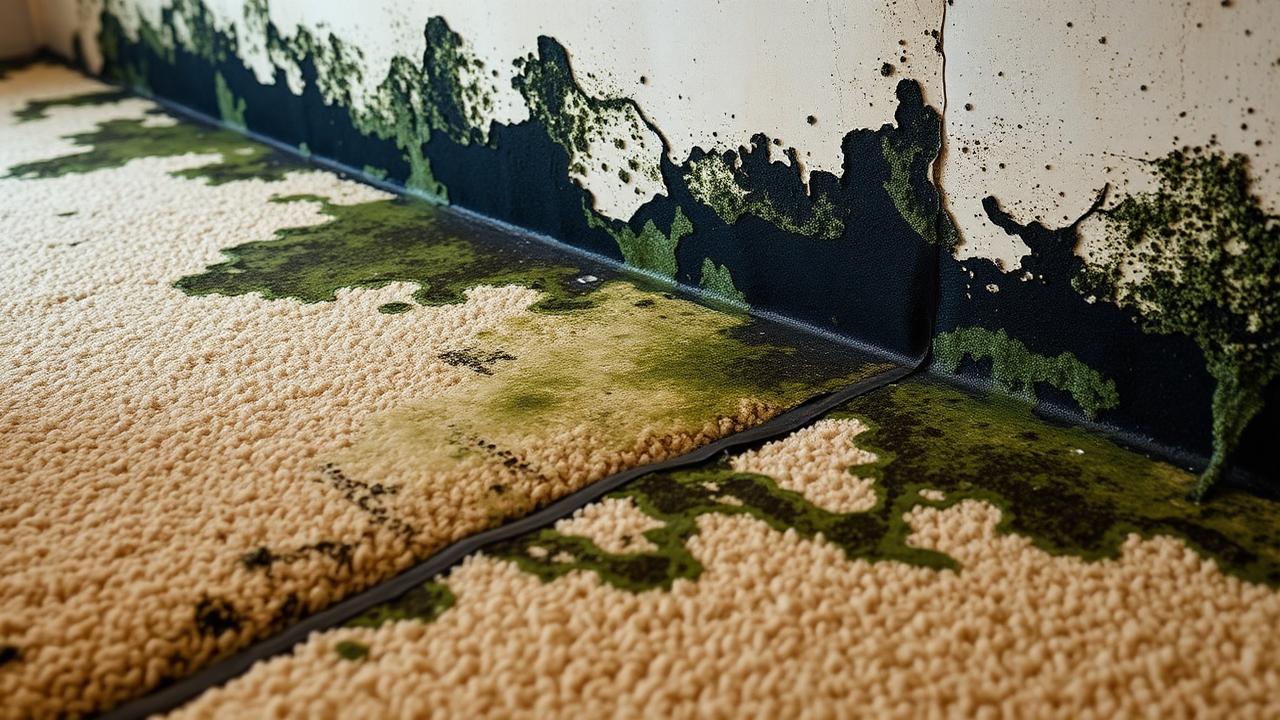
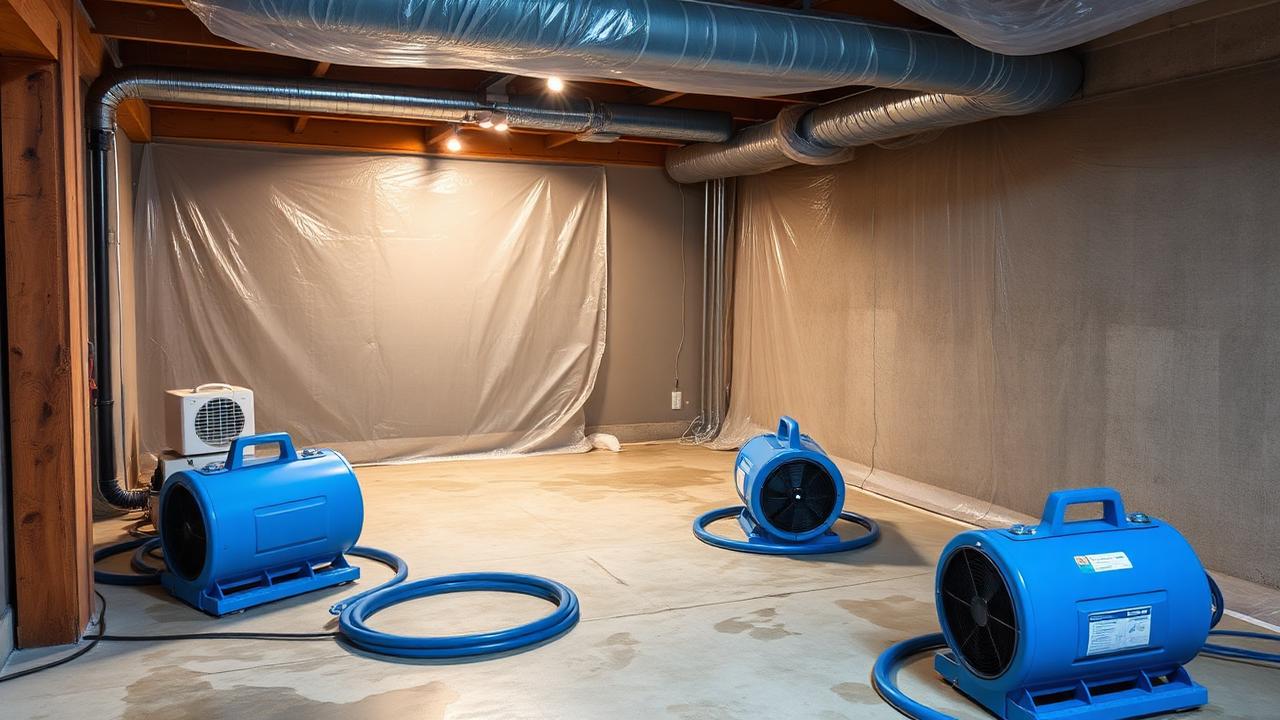
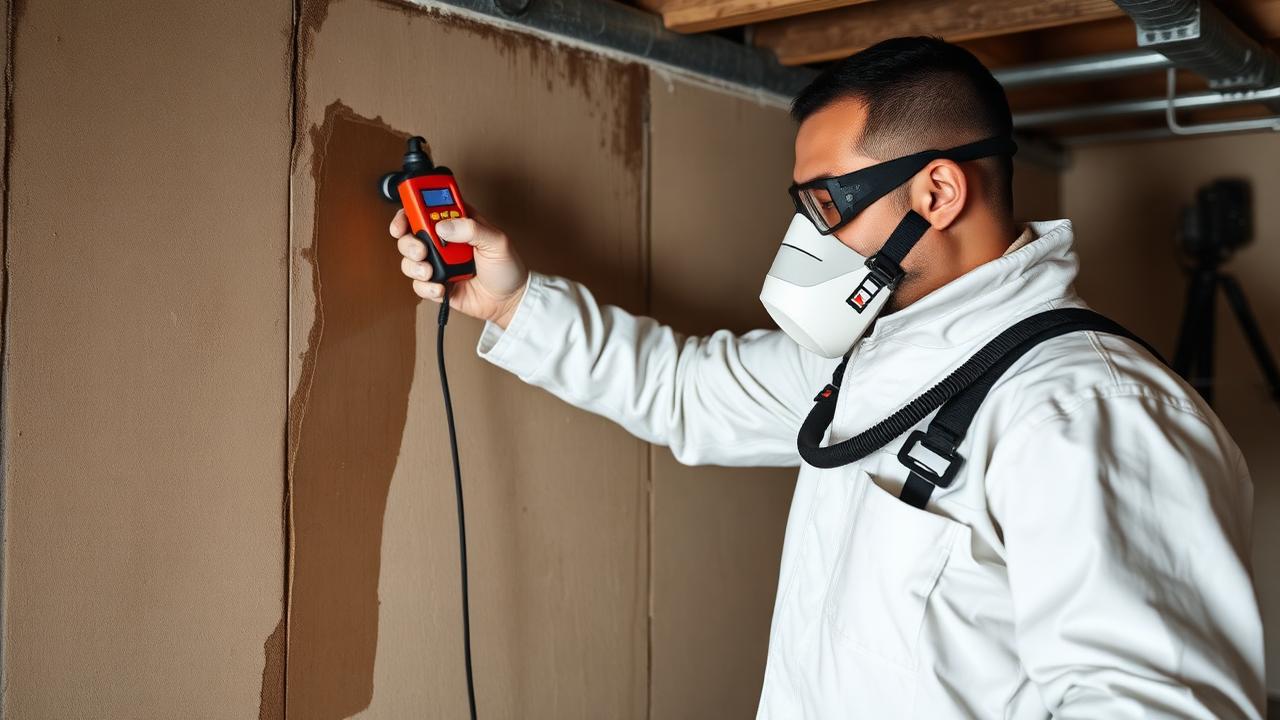
A flooded basement is stressful. A flooded basement with wall-to-wall carpet is a health emergency waiting to happen. Within 24 to 48 hours, wet carpet backing, underpad and paper-faced wall materials become an ideal breeding ground for mould, bacteria and dust mites — and the people breathing that air are your family, your children, and often elderly parents living downstairs.
This guide explains, in plain language, what actually happens inside a wet basement, how mould affects your health, and why the restoration company you choose in the first 24 hours decides whether this becomes a $6,000 carpet replacement or a $60,000 mould remediation and rebuild. It follows PMII industry-standard water damage restoration practices (water damage) and industry-standard mould remediation practices (mould remediation) — the two North American standards that Ontario insurers and courts rely on.
If you already have water on the floor, stop reading and call +1 855-324-7356 for 24/7 IICRC WRT/FSRT and PMII CMR-certified dispatch across Kingston, Ottawa, Nepean, Barrhaven, Kanata, Orleans, Brockville, Belleville, Trenton and surrounding Eastern Ontario communities.
Why wet basement carpet is uniquely dangerous
Basement carpet is the worst possible flooring for a flood, for three reasons:
- The underpad acts like a sponge. A single square metre of saturated underpad can hold 4–6 litres of water — invisible from above, but pressed against wood subfloor or concrete for days.
- Carpet backing is 100% cellulose food for mould. Jute, latex, and paper backings feed Aspergillus, Penicillium, Stachybotrys (black mould), and Cladosporium within 24–48 hours.
- Basements stay warm and humid. At 18–22 °C and relative humidity above 60%, mould spores go from dormant to actively growing in less than two days.
Add sewer backup or overland flood water — which is Category 2 or 3 under industry-standard water damage practices — and the carpet is no longer salvageable. It is contaminated waste that must be removed, bagged and disposed of under industry-standard mould remediation practices procedures.
We break this down in detail in our anchor guides for Nepean basement flooding and wet carpet removal, Kanata & Stittsville basement floods, and Barrhaven basement flood & mould.
The health impact of mould from a flooded basement
Health Canada, the U.S. CDC, the U.S. EPA and the World Health Organization all agree: there is no safe level of indoor mould growth. After a basement flood, the people at highest risk are:
- Infants and children — developing lungs, more time on the floor near mould reservoirs
- Seniors — reduced immune function
- Anyone with asthma, COPD or allergies — mould is a proven asthma trigger
- Immunocompromised residents — cancer patients, transplant recipients, people on immunosuppressants
- Pets — dogs and cats sleeping on wet carpet inhale far more spores per kilogram of body weight than adults
Symptoms commonly reported after basement mould exposure
| System | Symptoms |
|---|---|
| Respiratory | Chronic cough, wheeze, worsening asthma, shortness of breath, sinus infections |
| Eyes, nose, throat | Itchy eyes, runny nose, sinus congestion, sore throat, hoarseness |
| Skin | Rashes, hives, worsening eczema |
| Neurological | Headaches, brain fog, fatigue, difficulty concentrating |
| Immune | Recurrent colds, allergic reactions that improve when you leave the house |
The classic diagnostic clue: symptoms get better within a few hours of leaving the home, and worse again within a day of coming back. If that pattern is happening in your household after a basement flood, request a professional moisture and air-quality inspection now.
Toxic mould, mycotoxins and MVOCs
Certain mould species — especially Stachybotrys chartarum (the well-known "black mould") — produce mycotoxins and microbial volatile organic compounds (MVOCs) that cause the strong, musty basement smell. Mycotoxins are what make some mould exposures more than an allergy problem. This is exactly why industry-standard mould remediation practices requires containment, HEPA-filtered negative-air machines, and post-remediation verification — not just spraying bleach and hoping for the best.
The 24 / 48 / 72-hour rule for wet carpet
Timing is everything. This is the timeline restoration professionals and Ontario insurers use:
- 0–24 hours — Extraction, controlled demolition of unsalvageable materials (Category 2/3 carpet, underpad, baseboards, wet wall materials bottoms), placement of commercial LGR dehumidifiers and axial air movers. This is the only window where a Category 1 carpet might be dried in place.
- 24–48 hours — Structural drying is well underway. Mould has begun germinating on any organic material that is still wet. Additional demolition is often required.
- 48–72 hours — Visible mould growth is common. The scope typically transitions from industry-standard water damage practices (water) to a hybrid industry-standard water damage restoration practices + industry-standard mould remediation practices (mould) remediation with containment and HEPA filtration.
- 72+ hours — Full industry-standard mould remediation practices Condition 3 scope with an independent Indoor Environmental Professional (IEP), pre- and post-remediation air sampling, and negative-air containment. Costs commonly triple.
For a deeper technical walk-through of this timeline, read our water remediation and early mould detection guide for Eastern Ontario and our homeowner do's and don'ts for water or mould in the home.
What homeowners should do — and never do
Do
- Stop the water source if it is safe (shut off supply, sump switch, main breaker if water is near outlets).
- Turn the furnace and HVAC off to avoid spreading spores through the ducts.
- Photograph and video everything before touching it — every wall, every piece of furniture, serial numbers of appliances. Ontario insurers require documentation.
- Call an IICRC WRT/FSRT and PMII CMR-certified restoration company immediately — before you call your insurer if you have to choose. Your policy legally requires you to mitigate further damage.
- Notify your insurer within 24 hours.
Don't
- Don't run a household shop-vac on Category 2 or 3 water. It aerosolizes bacteria and sewage into your breathing zone.
- Don't spray bleach on porous materials. Health Canada, the EPA and industry-standard mould remediation practices all agree: bleach is mostly water, which feeds the mould, while the chlorine evaporates from the surface. It lightens the stain and does nothing about the growth in the underpad or wall cavity.
- Don't rip out wall materials without containment. Uncontained demolition spreads spores through the whole house in minutes.
- Don't wait for the adjuster. Waiting 3–5 days for approval before mitigation is the single most common reason a $10,000 job becomes a $60,000 job.
- Don't sign a "we'll deal with insurance later" contract without a written scope.
Why the right restoration company changes the outcome
This is the part homeowners underestimate. The company you pick in the first 24 hours decides three things:
- How much of your home is saved vs. demolished. A certified crew maps moisture with pin and non-invasive meters, thermal imaging, and borescope inspection. A non-certified crew guesses and either over-demolishes (higher rebuild cost) or under-demolishes (mould comes back).
- Whether mould spreads to the rest of the house. Without proper containment and HEPA-filtered negative-air machines, spores travel through stairwells and HVAC in hours. This is the single most common way a basement flood becomes a whole-house mould problem.
- Whether your insurance claim is paid in full. Ontario insurers expect insurance-standard itemized documentation-documented scopes, daily moisture logs, and PMII-standard drying certificates. Missing paperwork = reduced payout or outright denial.
What to look for in a restoration company
- PMII CMR — Water Restoration Technician
- PMII CMR — Applied Microbial Remediation Technician (mould)
- certified fire and smoke restoration — Fire & Smoke Restoration Technician (bonus, shows depth)
- PMII Subrogation training — handles complex insurance claims
- WSIB clearance and $2M+ liability insurance — request the certificates
- Written itemized insurance scope, not a napkin quote
- Independent Indoor Environmental Professional (IEP) on Condition 3 mould jobs — the same company should not scope, remediate, and verify itself
- Local, 24/7 dispatch with real trucks and equipment — not a call centre subcontracting to whoever is available
Learn more about our full-scope capability on our complex projects, mould remediation, and water damage restoration service pages.
Red flags to walk away from
- No PMII certification numbers on request
- "We'll fully support your insurance claim, don't worry about it" without a written scope
- Uses bleach and fogging as the primary mould treatment
- Won't provide daily moisture logs
- Uses the same crew for scoping and verification on Condition 3 mould jobs (conflict of interest)
- Cash-only, no WSIB clearance certificate
The 8-step professional process, briefly
- Safety and scoping — power, gas, structural check; moisture mapping; water categorization under industry-standard water damage restoration practices.
- Water extraction — truck-mounted or portable, with anti-microbial pre-treatment on Category 2/3.
- Controlled demolition — carpet, underpad, wet wall materials, baseboards, insulation removed under containment.
- Containment and HEPA filtration — 6-mil poly walls, negative-air machines, cross-contamination prevention.
- Structural drying — commercial LGR dehumidifiers and axial air movers sized to the loss, with daily moisture logs.
- Antimicrobial treatment — EPA-registered, industry-standard mould remediation practices-compliant, on remaining structural materials.
- Post-remediation verification (PRV) — independent IEP air and surface sampling.
- Rebuild — affected building materials, and — where appropriate — flood-resilient materials such as luxury vinyl plank and PVC baseboards instead of carpet.
After the remediation: don't put carpet back
The single strongest recommendation we give every basement flood client: do not reinstall wall-to-wall carpet in a basement that has flooded once. Better options:
- Luxury vinyl plank (LVP) over a proper vapour barrier — waterproof, warm underfoot, easy to replace
- Sealed and stained concrete with washable area rugs
- Ceramic or porcelain tile with in-floor heating
We also recommend adding a backwater valve, a battery backup sump pump, and a WiFi water sensor on the basement floor. Many Ontario insurers now require the first two for sewer-backup endorsement renewal.
Frequently asked questions
See the FAQ section below for detailed answers on mould growth timelines, health symptoms, insurance coverage, PMII certifications and why choosing the right company matters. All answers are marked up as FAQPage schema so AI search engines (ChatGPT, Perplexity, Google AI Overviews, Copilot) can quote them directly.
Serving Kingston, Ottawa and all of Eastern Ontario, 24/7/365
24/7 Remedial Services is IICRC WRT/FSRT and PMII CMR-certified in Water (CMR), Mould (CMR), Fire (CMR) and Subrogation, with 20+ years of construction experience behind every scope. We dispatch across:
- Kingston region — Kingston water damage, Kingston mould remediation, Kingston flood damage, Napanee, Gananoque, Amherstview
- Ottawa region — Nepean, Kanata & Stittsville, Barrhaven, Orleans & Cumberland
- 1000 Islands & St. Lawrence corridor — Brockville, Prescott, Gananoque
- Quinte region — Belleville, Trenton and Quinte West
- Lanark & Rideau — Carleton Place, Smiths Falls, Perth
See our full service areas and locations pages for coverage detail.
Call +1 855-324-7356 now for 24/7 IICRC WRT/FSRT and PMII CMR-certified basement flood, wet carpet and mould response — before your health, your home, or your insurance claim becomes the problem.
Frequently asked questions
- Is wet basement carpet really a health risk?
- Yes. Wet carpet backing and underpad hold organic dust, skin cells and moisture — ideal conditions for mould, bacteria and dust mites. Health Canada and the CDC link indoor mould exposure to asthma attacks, allergic rhinitis, sinus infections, chronic cough, headaches and worsening symptoms in immunocompromised residents, infants and elderly household members.
- How quickly does mould start growing on wet basement carpet?
- Under typical basement conditions (18–22°C and RH above 60%), mould germinates on wet carpet backing, underpad and paper-faced wall materials within 24–48 hours. Visible colonies appear by day 3–5, and after 7 days the loss usually escalates to a full Condition 3 remediation under PMII CMR-informed professional mould remediation practices with containment and HEPA filtration.
- What symptoms suggest hidden mould from a past basement flood?
- Persistent musty odour, worsening asthma or allergies indoors, morning headaches, itchy eyes and sinus congestion that improve when you leave the house, and visible staining on baseboards or the bottom of wall materials. If any of these persist after a previous flood, request a professional moisture and air-quality inspection.
- Can I just dry the carpet and skip removal?
- Only for clean Category 1 water (a broken supply line), extracted within 24 hours, with the underpad replaced and commercial LGR dehumidifiers running. Sewer backup, groundwater and long-standing water are Category 2 or 3 under IICRC S500-aligned practices — the carpet, underpad and affected wall materials must be removed and disposed of.
- Why does the choice of restoration company matter so much?
- A PMII Certified Mold Remediator company with IICRC WRT water-restoration support follows IICRC S500-aligned practices and PMII CMR-informed professional mould remediation practices, uses containment and HEPA filtration to prevent cross-contamination, documents moisture readings and scope with an Xactimate-format breakdown on request, and coordinates directly with your insurer. A non-certified crew or a general handyman often spreads spores through the HVAC, misses hidden wall-cavity moisture, and leaves you with a bigger mould job 60–90 days later.
- What certifications should the restoration company hold?
- At minimum IICRC WRT for water, IICRC FSRT for fire and smoke, subrogation certification for documentation, PMII CMR for mould, and NAMRI membership. Ask for certificate numbers, liability insurance and WSIB clearance before signing anything.
- Do I have to use my insurance company's preferred vendor?
- No. Ontario homeowners have the legal right to choose any qualified IICRC WRT/FSRT and PMII CMR-certified restoration company. Preferred vendors work under volume contracts with the insurer — you can pick the contractor whose priority is your home and your health.
- Does Ontario home insurance cover mould from a basement flood?
- Mould that results from a sudden, covered water loss (burst pipe, appliance failure, sewer backup with endorsement, overland water with endorsement) is generally covered up to a sub-limit of $10,000–$25,000. Long-term seepage and maintenance issues are excluded. Document the triggering event immediately and start emergency mitigation — your policy requires it.
- Do you respond 24/7 across Kingston, Ottawa and Eastern Ontario?
- Yes. IICRC WRT/FSRT and PMII CMR-certified crews dispatch 24/7/365 across Kingston, Napanee, Belleville, Brockville, Gananoque, Smiths Falls, Perth, Carleton Place, Ottawa, Nepean, Kanata, Stittsville, Barrhaven, Orleans and surrounding communities. Call +1 855-324-7356 any time.
Instant cost estimate
Preliminary CAD range in under a minute. A free on-site inspection confirms the scope, and financing is available while your claim is reviewed.
Estimated mitigation range
$3,978 – $5,850
Mitigation and remediation only — we do not quote or perform reconstruction.
Free instant cost estimators
Get a preliminary CAD range in under a minute — no obligation, no payment details. The on-site visual inspection that confirms it is free, and financing is available if paying up front is a concern.
About this guide & the team behind it
This article was written and reviewed by the PMII-certified restoration technicians at 24/7 Remedial Services, a Kingston, Ontario property-restoration company with more than two decades of combined field and construction experience across Eastern Ontario. We respond 24 hours a day, 7 days a week, 365 days a year to water, fire, smoke, mould, storm, and impact losses across Kingston, Napanee, Brockville, Gananoque, Picton, Belleville, Smiths Falls, Perth, Prescott, Carleton Place, and the surrounding Frontenac, Lennox & Addington, Leeds & Grenville, Lanark, Hastings, and Prince Edward county townships.
Every guide on this blog is grounded in the same industry standards Canadian insurance carriers expect on a properly documented claim file: the IICRC S500 standard for water damage restoration, the IICRC S520 mould standard for professional mould remediation, and industry-standard fire & smoke restoration practices for fire and smoke restoration. Where the article references a Category 1/2/3 water classification, a Class 1–4 drying environment, a Condition 1/2/3 indoor mould assessment, or a specific itemized line item, that terminology is used deliberately — it's the same vocabulary your adjuster uses and the same vocabulary that holds up in subrogation.
If you are dealing with an active loss as you read this, please do not wait. Most Kingston addresses see one of our restoration crews on-site within 60 minutes of dispatch — including overnight, on weekends, and during severe-weather events. Surrounding Eastern Ontario communities follow as quickly as travel allows. The cost of waiting on mitigation is almost always higher than the cost of acting immediately.
How our crews work
- › 24/7/365 dispatch from a Kingston base
- › Free written itemized insurance scope before any work begins
- › Daily timestamped moisture logs & photo documentation
- › Fully itemized documentation accepted by every major Canadian insurer
- › Emergency mitigation start to finish under one accountable project lead
What we restore
- › Water damage — burst pipes, floods, sewage backups
- › Fire & smoke — soot removal, deodourization, structural drying
- › Mould — IICRC S520 containment & clearance
- › Storm & impact — emergency board-up and tarping
- › Commercial, multi-unit, institutional & residential
Need restoration help right now?
24/7 Remedial Services dispatches PMII-certified crews around the clock across Kingston and Eastern Ontario. Whether the damage is water, fire, smoke, mould, or storm-related, calling early in the first 24 hours dramatically reduces the eventual scope of work, the disruption to your property, and the size of your insurance claim. Our team handles the mitigation and the documentation — so you only deal with one accountable contact from the first call through final verification, and you submit our itemized reporting to your insurer for your own reimbursement.